Roseville railroad history explains much more than the tracks running through town. It connects the city’s growth to jobs, migration, agriculture, and the everyday lives of working families. To understand Roseville’s history and heritage, start with the relationship between the railroad and the community that developed around it.
That connection gained a timely spotlight in 2026, when Union Pacific’s Big Boy No. 4014 visited Roseville during its America250 tour. The visiting locomotive offered a reason to revisit a much older question: how did rail transportation help turn a small junction into a city?
Why Railroad Heritage Is in the Spotlight in 2026
Big Boy’s public display in Roseville on April 10 and 11 connected the city with a national celebration of American history. Union Pacific’s account of the Roseville visit also highlighted J.R. Davis Yard, underscoring that this was not simply a stop beside a historic monument. Roseville remains a working railroad center.
The conversation continued after the tour. In an August 2026 explanation of Big Boy’s operation, Union Pacific described how accompanying diesel locomotives assist with braking, switching, and other support. That pairing of preserved machinery and modern operations provides a useful lens for Roseville itself: railroad heritage is not only about what disappeared, but also about what changed and endured.
Big Boy itself belongs to a later chapter. No. 4014 dates to 1941, so it should not be confused with the engines that served Junction in the 1860s or the equipment involved in Southern Pacific’s early expansion.
From an 1864 Junction to a Growing Town
Roseville’s story did not begin with the railroad. The Maidu Museum & Historic Site documents the Nisenan Maidu’s connection to this region over thousands of years. Railroad development belongs within that longer history, rather than replacing it.
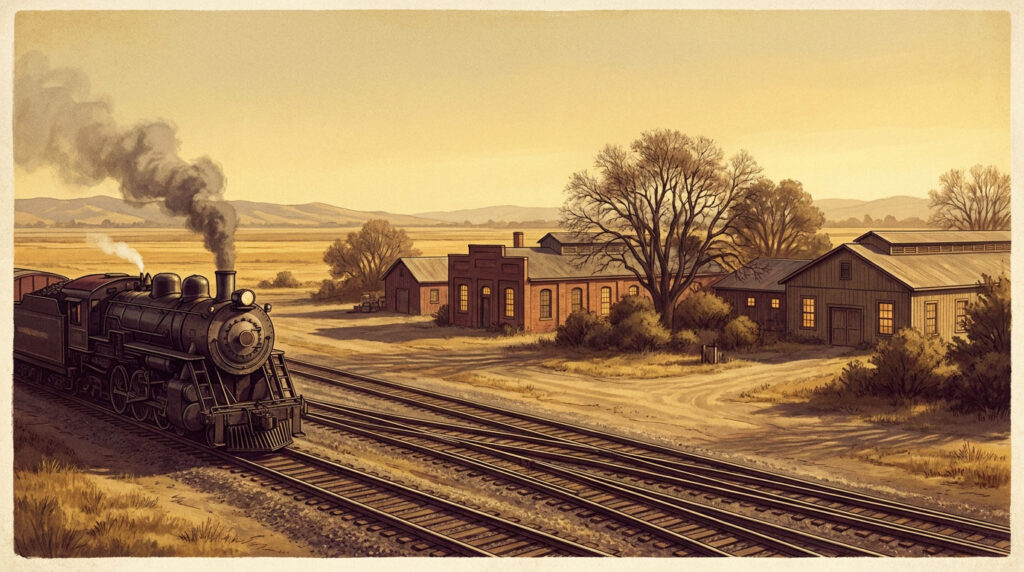
In 1864, the Central Pacific’s line from Sacramento crossed the California Central Railroad, which connected Folsom and Lincoln. According to the City of Roseville’s historical account, the crossing became known as Junction. Over the following decades, Roseville developed as a trading center serving nearby farmers.
Remembering the People Behind the Rails
The wider railroad network depended on demanding human labor. The National Park Service’s history of Chinese railroad workers explains their essential contributions to Central Pacific construction and the discrimination they experienced. Remembering those workers adds necessary depth to a story too often told only through locomotives and company names.
The Big Move That Changed Roseville
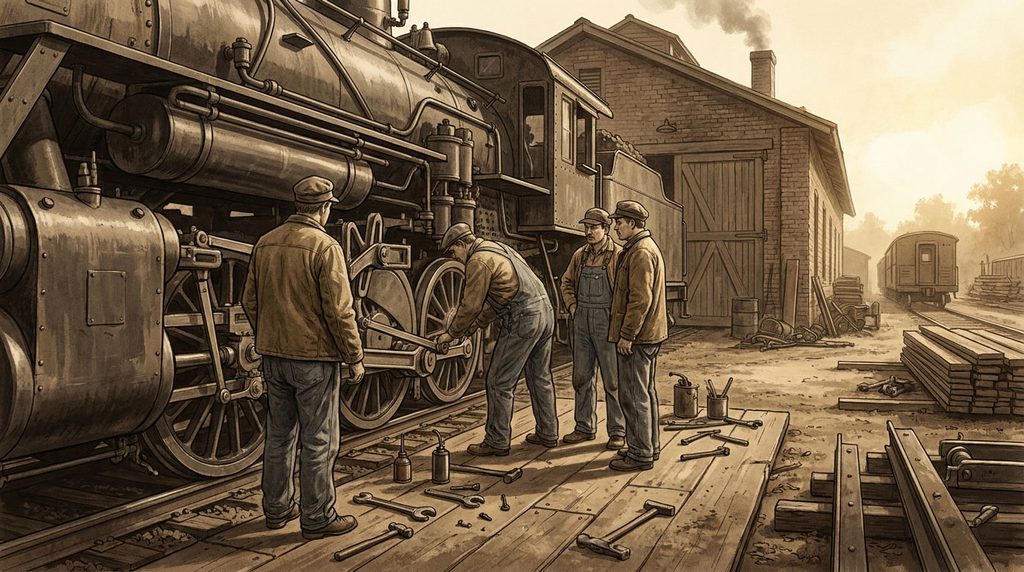
The decisive expansion came when Southern Pacific transferred operations from Rocklin to Roseville between 1906 and 1908. The local historical society’s account of the Big Move explains that available land in Roseville allowed the railroad to expand beyond its Rocklin facilities.
A terminal, roundhouses, and repair shops meant more than additional train movements. They brought a concentration of work that encouraged people to settle nearby. The city incorporated in 1909, following this period of rapid development. Its history records growing demands for housing, water, sanitation, schools, and fire protection as the community expanded.
The effects reached individual streets. Pacific Street gained businesses, while construction spread along Lincoln, Main, and Church streets. Elizabeth “Grandma” Morgan turned her home into a boardinghouse for railroad workers. Such details reveal how the railroad shaped opportunities beyond the yard: residents also made livelihoods feeding, housing, and supplying the people who worked there.
Railroad Families Made the Connection Personal
One example appears in Robert Cree’s family recollections, published by Union Pacific. He describes his grandfather moving with the railroad and later generations working as conductors, switchmen, and engineers. This is one family’s experience, not a portrait of every resident, but it shows how railroad employment could link home, school, and work across generations.
How Railroads Supported California Agriculture
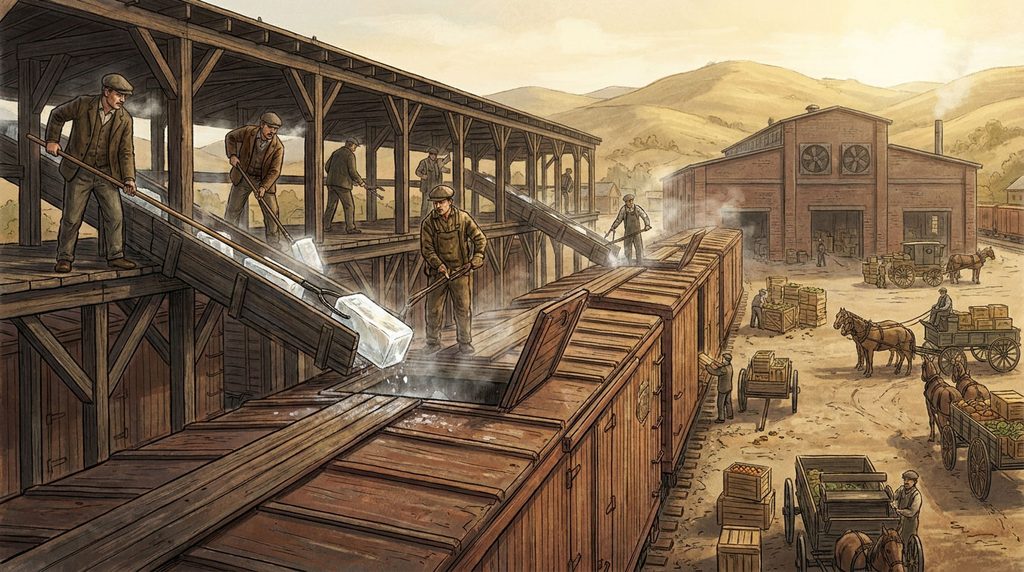
Rail transportation also connected Roseville to markets far beyond Placer County. Pacific Fruit Express’s local facilities helped keep produce cool during shipment, making refrigeration part of the city’s industrial story. The Roseville Historical Society’s railroad overview describes the importance of ice production for fruit and vegetable shipments.
Why Ice Was as Important as Steam
Before mechanical refrigeration became standard in freight cars, keeping perishable food cool required ice and supporting infrastructure. A shipment depended on more than an engine pulling cars: it also needed equipment, handling, maintenance, and temperature control. Roseville’s role in that system connects local railroad history with the food reaching distant households.
Seen this way, the yard was part of an economic chain linking farms, packing operations, transportation workers, and customers. Agricultural history and railroad history are not separate subjects here; they help explain one another.
From Steam Engines to a Working Freight Hub
Changes in ownership and technology did not erase Roseville’s railroad role. Union Pacific’s Roseville history records its acquisition of Southern Pacific in 1996 and a major yard rebuilding program dedicated in 1999.
In April 2026, Union Pacific described J.R. Davis Yard as a major Northern California rail hub. A classification yard sorts freight cars into trains for onward movement. Understanding that purpose helps explain why a city can remain important to rail transportation even when modern equipment looks very different from the steam locomotives featured in heritage photographs.
A 2025 Union Pacific overview of railroad technology, featuring employees at J.R. Davis Yard, describes changes including radio communication, remote-control operations, and digital equipment information. The tools have evolved, but the underlying task remains recognizable: organize cars for their next journey and keep freight moving safely.
That continuity offers another way to read the city. Its working yard and preserved machinery are not competing identities. One illustrates transportation work that continues today; the other helps visitors understand tools used by earlier generations. Both matter, provided their different periods and purposes remain clear.
Explore Roseville’s Railroad Legacy Today
Start With Public Heritage Displays
Preserved equipment makes the story easier to visualize. Union Pacific documented the 2014 installation of rotary snowplow SPMW 7221 beside Southern Pacific locomotive No. 2252 near the yard. These machines connect local work with the challenges of keeping mountain rail routes operating.
When exploring nearby streets, ask what an older building originally provided: accommodation, supplies, entertainment, or a place to gather. Compare dated photographs with the present streetscape rather than assuming every old-looking facade is original. This approach turns a casual walk into a closer investigation of how a railroad community lived.
Keep Your Visit Safe
Use authorized public viewing areas and follow posted instructions. Union Pacific’s railfan guidance advises staying at least 25 feet from tracks and never entering railroad property without permission. A photograph is never a reason to step onto tracks or ballast.
Roseville railroad history is ultimately a community story: workers, families, businesses, and infrastructure growing together. Continue exploring our Roseville history articles to discover more connections between familiar places and the lives that shaped them.