
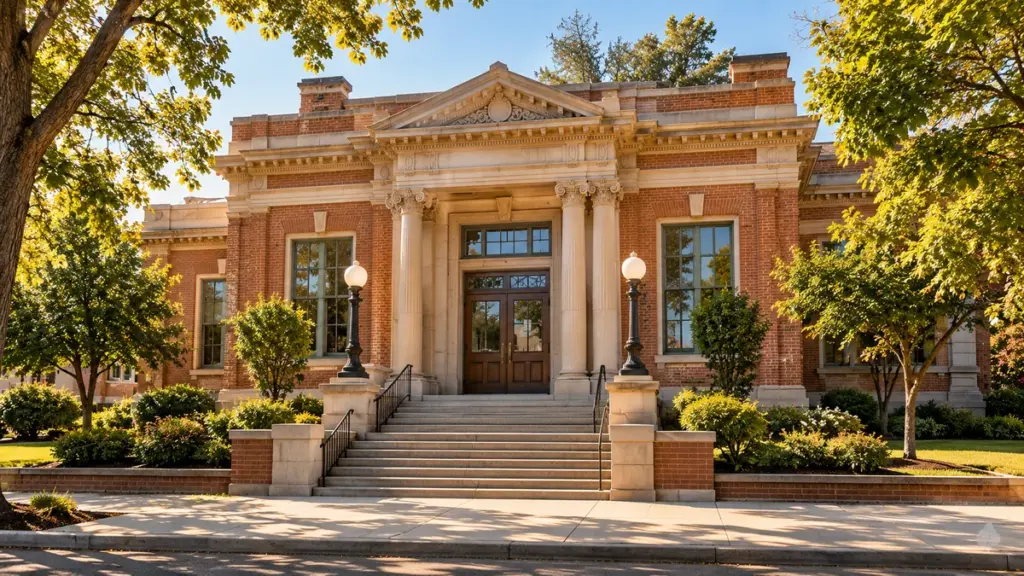
The Roseville Carnegie Library tells two connected stories: how a community created a permanent home for public reading, and how a later generation found a new purpose for that building. At 557 Lincoln Street, the former library remains a recognizable link between Roseville’s early civic ambitions and its interest in preserving local history.
Its story is larger than a famous donor’s name. It includes local organizers, a land donation, regional building materials, changing library services, and a preservation effort. Following those connections turns an attractive historic building into a useful starting point for understanding the city around it.
A permanent library takes shape
The City of Roseville’s library history dates the establishment of the public library to January 1911 and the opening of the Lincoln Street building to 1912. That distinction matters: creating a public institution and completing its building were related steps, rather than a single event.
Local advocacy helped move the project forward. The historical marker for the Carnegie Library credits the Women’s Improvement Club with encouraging city support and an application for Carnegie funding. It records a $10,000 grant received in 1911 and identifies businessman A. B. McRae as the donor of the land.
Those contributions explain why the library should be understood as a community project. Funding, a suitable site, public backing, and the commitment to operate a library all had to come together. The building opened in October 1912, giving that work a lasting physical presence.
The Carnegie connection
Roseville’s project belonged to a much wider library movement. Carnegie Corporation’s account of Andrew Carnegie’s philanthropy describes support for public libraries across the United States and beyond. The central idea was access to knowledge through a public institution, with communities taking responsibility for maintaining it.
That wider context adds meaning without making Roseville’s experience interchangeable with every other town’s. The local names, building decisions, and later preservation efforts give this library its particular history. For the economic setting around those decisions, read how the railroad shaped Roseville.
Reading the building’s architecture
The National Register record for the Carnegie Library identifies William Henry Weeks as its architect and classifies the building as Classical Revival. Its nomination describes a raised basement and a prominent entrance porch. These features offer a more precise way to discuss the building than simply calling it old-fashioned.
A useful first look begins with its arrangement. Notice how the entrance organizes the facade, how the windows relate to one another, and how the building meets the street. Then compare those observations with a documented description. Architectural interpretation becomes stronger when a visible detail and a written record support each other.
Materials connect it to nearby communities
The museum operator’s history of the building identifies brick and terra cotta from Gladding McBean in Lincoln and granite from Rocklin. These materials connect the library to neighboring places as well as to Roseville’s own public life.
A building can therefore tell a regional story through ordinary details. Steps, masonry, and decorative finishes invite questions about manufacturing and construction. They also remind us that a landmark was assembled through practical work, rather than appearing fully formed as a historic attraction.
Look closely without assuming everything is original
Present appearance alone cannot date a doorway, finish, or repair. Restoration can preserve a building while changing individual components. Before describing a detail as original, compare dated photographs, architectural records, or restoration documentation.
From public library to local-history museum
In 1979, Roseville moved its main library collection to the Downtown Library near Taylor Street. The Carnegie building continued as a branch before closing in 1982. Keeping those stages separate avoids the mistaken impression that every library function ended when the new main facility opened.
Closure could have ended the building’s public role. According to the museum operator’s history, citizens organized to preserve it when demolition was proposed. Fundraising and restoration followed, and the building reopened as a museum in 1988.
That change of use is central to its story. A place once used to circulate books became a place for interpreting the community’s past. The building itself became part of the history it helped preserve. The organization operating the Carnegie Museum publishes its own accounts and collection information at rosevillehistorical.org, a separate website from this publication.
What photographs can add to the story
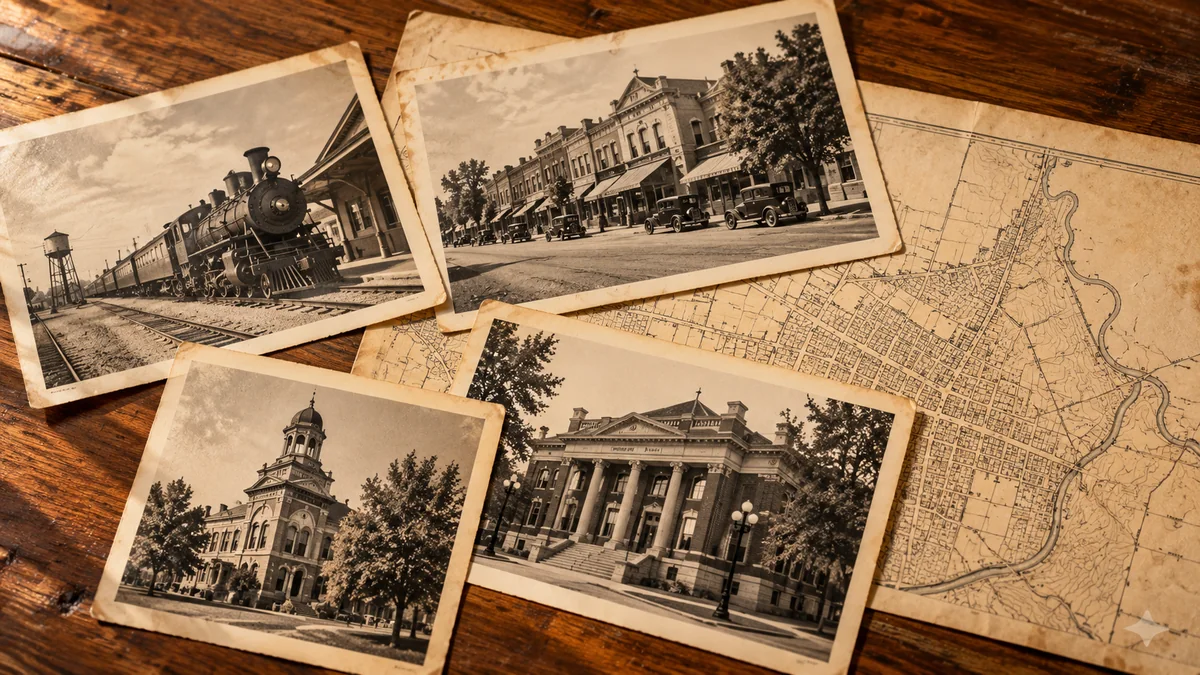
An early photograph can reveal the library’s surroundings as well as the structure. Street surfaces, neighboring buildings, signs, landscaping, and the photographer’s viewpoint all offer clues. A later image may show a changed setting even where the library remains recognizable.
Compare images with a clear question in mind. Has the entrance changed? Are the same windows visible? Does a different camera position explain an apparent difference? The Library of Congress primary-source guides offer a useful approach to separating observations from interpretations and identifying questions for further research.
Keep the image and its record together
Save the photographer’s name when known, the collection, the supplied date, and the catalogue reference. A date marked approximate should remain approximate. A modern colorized or reconstructed image should never be presented as an untouched historical photograph.
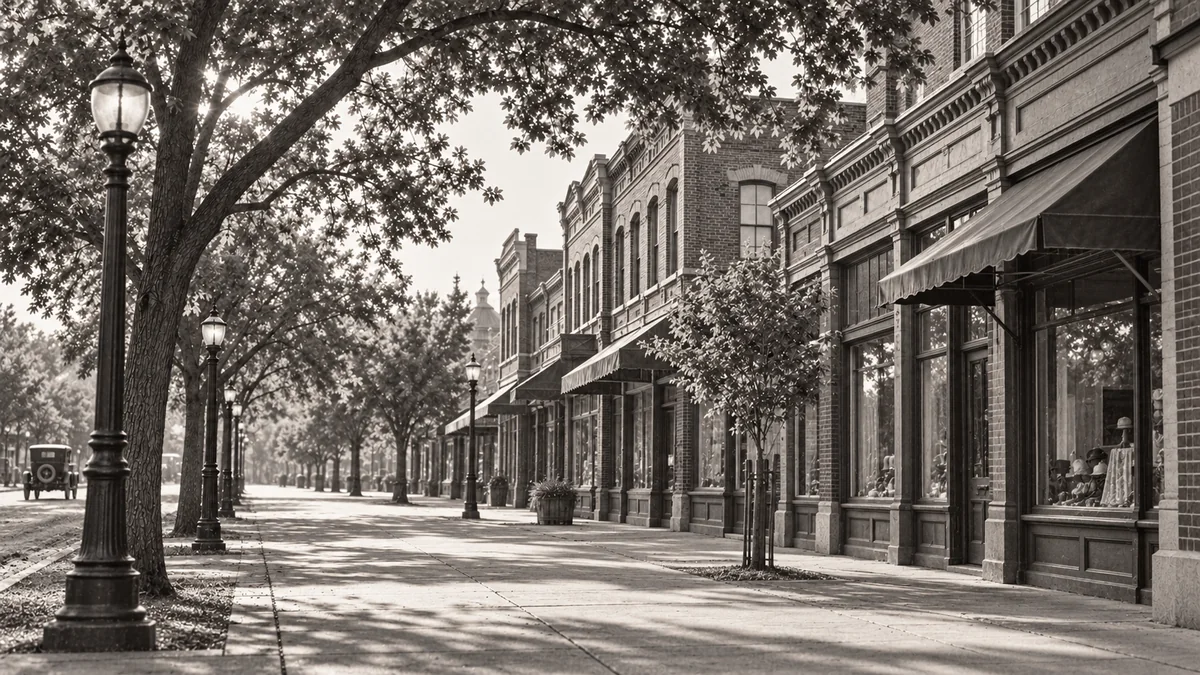
Our guide to what old photographs reveal develops this method. To place the library within a wider streetscape, compare the questions raised in Old Town, then and now.
Follow one question through several records
For a manageable research project, choose one feature rather than attempting a complete building history. The entrance is a good example. Find the earliest dated view available, compare a later photograph, and note which features appear unchanged. If an alteration seems likely, look for a corresponding description in restoration records. The photograph suggests a question; another source may help answer it.
Keep a short record of what each source actually establishes. A photograph might show a feature by a particular year without revealing when it was installed. A newspaper report might describe proposed work without proving that it was completed. Preserving those distinctions makes a small investigation useful to the next reader.
A landmark with more than one chapter
The Carnegie Library’s value lies in the connections it makes visible: philanthropy and local organization, architecture and regional materials, public services and preservation. Its changing purpose also shows that continuity does not require a building to perform the same function forever.
Reading its history carefully means distinguishing the institution’s founding, the building’s opening, the library’s relocation, and the museum’s creation. Each answers a different question. Together, they explain why the Roseville Carnegie Library remains an important starting point for exploring shops, schools, and everyday life beyond its walls.