
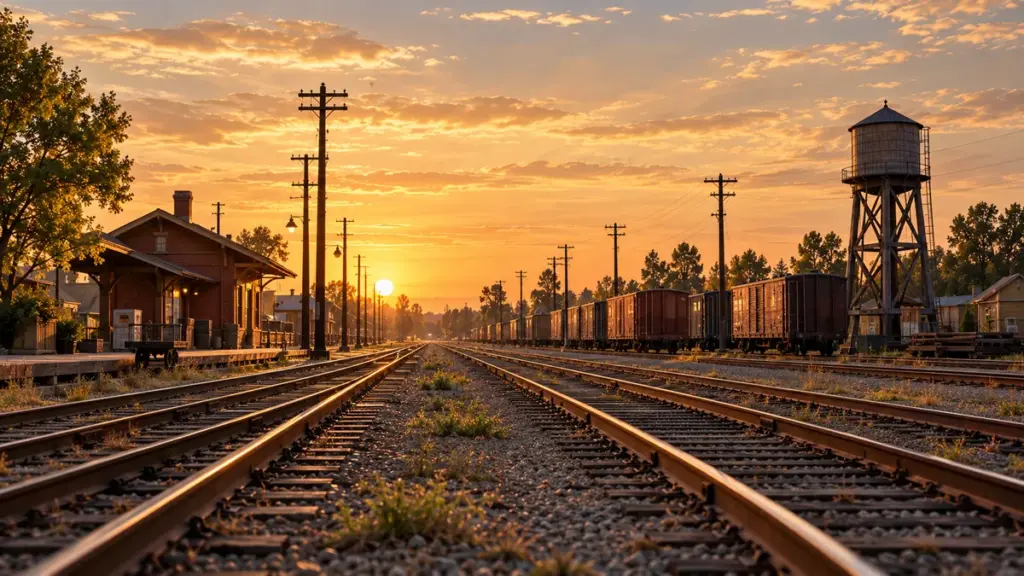
Roseville railroad history begins with a junction, but its influence reaches well beyond the tracks. Rail work helped determine where people lived, which businesses opened, and how the city connected with California’s farms and distant markets. The railway was an employer, a transportation system, and a powerful influence on the shape of daily life.
Understanding that influence means looking at several periods together. The arrival of a rail connection, the expansion of maintenance facilities, and later changes in freight technology each created different demands. Roseville’s development becomes clearer when those changes are connected with the streets, buildings, and households around them.
A junction that connected different directions
The City of Roseville’s historical account traces the railroad junction to 1864, when Central Pacific construction advancing from Sacramento met the California Central line linking Folsom and Lincoln. The settlement became known as Junction before taking the name Roseville.
A junction creates opportunities that a simple passing track does not. Trains, goods, and travelers can change direction there. Businesses have reasons to locate close to that movement, while workers need places to eat, sleep, and buy everyday supplies. This helps explain why railway geography is such a useful starting point for reading the older city.
Why the move from Rocklin mattered
The next major change unfolded between 1906 and 1908. According to Union Pacific’s history of Rocklin, Southern Pacific selected Roseville for expanded facilities because it offered less expensive land and room to grow without Rocklin’s granite constraints. The roundhouse operations had transferred by April 1908.
Moving a workplace of that scale also moved activity into the surrounding community. A useful way to understand the change is to distinguish the railway’s buildings from the wider network of homes, shops, and services that supported its workers. Our Roseville timeline places these years alongside other local milestones.
The people behind the locomotives
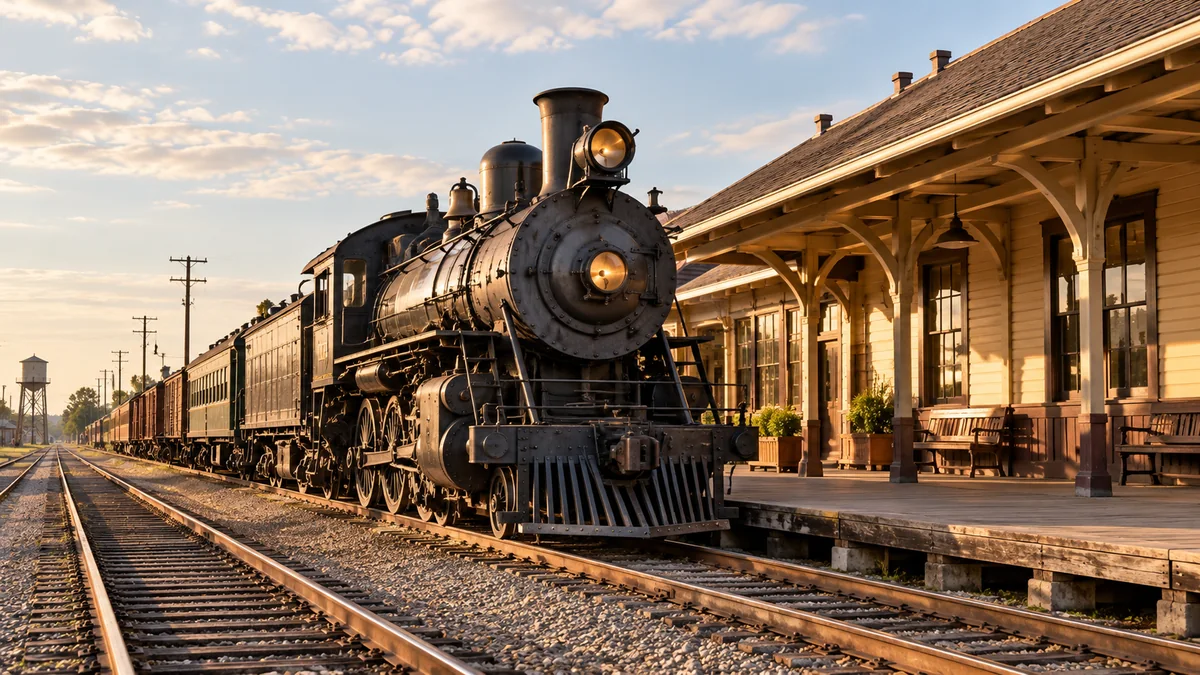
A railway photograph may put an engine at the center, yet the system depended on many kinds of work. Repairing equipment, maintaining track, directing movements, handling freight, and keeping records required different skills. Researching the workers turns an impressive industrial scene into a history of people and responsibilities.
The broader Central Pacific story also includes the Chinese migrants whose labor was fundamental to construction of the transcontinental line. Stanford’s Chinese Railroad Workers in North America Project examines their lives and contributions. That wider history should inform local interpretation without assigning an undocumented identity or experience to someone in a Roseville photograph.
Follow a worker beyond the job title
A name in a payroll or directory is a beginning. Matching that name carefully with an address, census entry, newspaper notice, or family photograph can help connect work with home life. Names can repeat, spellings can vary, and a person may change jobs. Keep the dates beside each record instead of treating every matching surname as the same individual.
This approach gives ordinary details their proper place. A boarding-house address, a school connection, or an organization listed in an obituary may reveal a different side of the railway community. Our guide to what old photographs reveal explains how to examine another part of that evidence.
Refrigerated freight linked rails with agriculture
The relationship between railroads and food becomes easier to picture through the equipment used to carry produce. Before widespread mechanical refrigeration in railcars, ice could help protect perishable cargo during a journey. That created work beyond driving trains: cars required preparation, maintenance, and attention to their cooling systems.
The Pacific Southwest Railway Museum’s record for Pacific Fruit Express car 11207 describes rooftop hatches used for loading ice. Built in Colton in 1957, the surviving car also has a documented service connection with Roseville’s shops. It offers a concrete example of the equipment behind refrigerated freight.
A railcar can connect several histories
Read the object alongside its service record
Examine the doors, insulation, hatches, and identification numbers, then compare those features with the museum’s description. A component can suggest a function; the record explains the particular car. This distinction prevents a general observation from turning into an unsupported claim about where or when it operated.
Refrigerated transport also connects with the agricultural changes explored in From farms to neighborhoods. The history of a farm, packing operation, or market may extend far beyond the property where food was grown.
A growing railway community became a city
Union Pacific’s Roseville history connects the terminal expansion with the community’s growth and its incorporation in 1909. The same account identifies the railroad as a major employer and a contributor to trade, agriculture, and residential development.
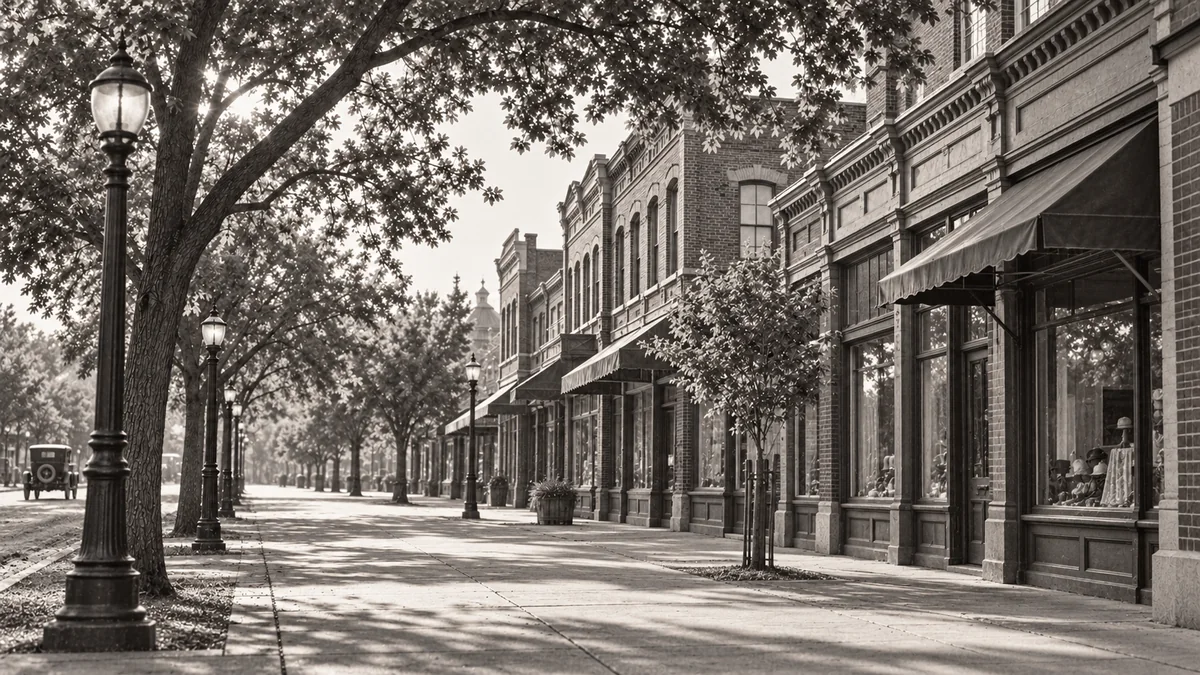
Those connections suggest questions that can be explored block by block. Where were the homes closest to the work? Which businesses supplied employees? How did people cross between neighborhoods separated by railway land? A map can show the physical arrangement, while directories and photographs can explain how particular places were used.
Old Town, then and now connects that larger story with individual streets and buildings. A modest storefront can be as revealing as a prominent civic landmark when its occupants and dates are known.
Change continued after the steam era
The railroad’s influence did not end with the familiar steam locomotive. Union Pacific’s account records its acquisition of Southern Pacific in 1996 and the dedication of an expanded Roseville yard in 1999. These later changes belong in the story alongside the early junction and roundhouse.
Studying different periods helps avoid freezing Roseville into a single picturesque moment. Equipment changes, new operating methods, and altered business needs can affect both the railway and nearby streets. A historic image and a current view are most useful when their dates and purposes are explained.
Reading the railway’s lasting influence
Roseville’s railroad history is visible in tracks and preserved equipment, but it can also be followed through family records, street patterns, commercial buildings, and the movement of agricultural goods. Each type of evidence answers a different question.
Start with one clear subject: a worker, a building, a photograph, or a particular year. Then use the research resources guide to find supporting records. The strongest local stories show how a particular detail connects with the larger city while leaving room for what the surviving evidence cannot establish.