
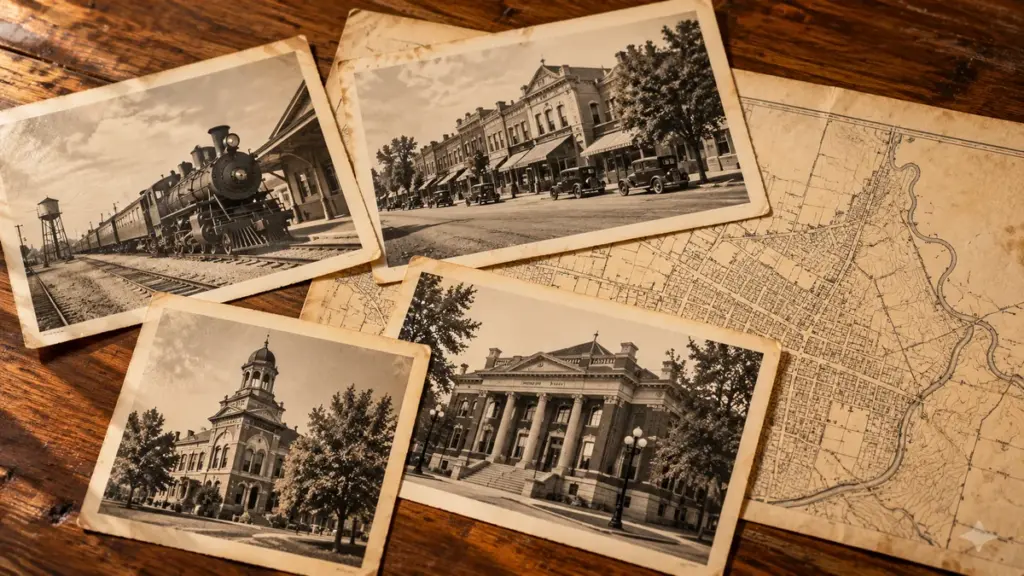
Old Roseville photographs can turn a familiar street into a new set of questions. A storefront may carry a different name, a railway crossing may appear beside a vanished building, or an ordinary family picture may preserve a porch that has since changed. The most useful discoveries often begin with something small.
A photograph, however, does not explain itself. Its date, viewpoint, caption, and original purpose affect what it can tell us. Reading an image carefully means separating visible details from plausible interpretations, then checking those interpretations against other records. This approach helps connect individual pictures with the changing streets explored in Old Town, then and now.
Begin with what the photograph actually shows
Before identifying people or assigning a date, spend a few minutes describing the image. Work from the foreground to the background. Note buildings, windows, lettering, vehicles, street surfaces, vegetation, and the position of shadows. An overlooked detail near an edge may be more useful than the image’s central subject.
The Library of Congress primary-source analysis guides organize investigation around observation, reflection, and questions. These stages offer a useful way to slow down an immediate reaction and make the reasoning behind an identification visible.
Keep observations separate from explanations
Write “three people stand beside a shop entrance” before writing “the owners pose outside their business.” The first statement describes something visible; the second adds an explanation that needs support. A person’s position in a photograph does not establish their job, relationship, or reason for being there.
A simple three-column note
- Visible detail: Part of a painted business name appears above a doorway.
- Possible explanation: The building may match a business listed in an old directory.
- Next question: Does the directory place that business at this address during the likely period?
This is a hypothetical example, not an identification of a particular Roseville photograph. Keeping that distinction clear prevents an attractive possibility from becoming an unsupported caption.
Give your notes a working title such as “Unidentified storefront, possible Lincoln Street.” This preserves a promising idea without presenting it as a finding. Later, an exact address or a matching doorway can either strengthen the identification or send the search elsewhere.
Read the object as well as the scene
If you can examine the original safely, consider its reverse, mount, envelope, or accompanying album page. Photographer stamps, handwritten notes, and collection numbers can lead to a more complete record. The National Archives illustrates this approach in its guide to clues written or printed on photographs.
Record a handwritten caption exactly before interpreting it. If a name is difficult to read, mark the uncertainty instead of choosing the most familiar spelling. Also distinguish between an inscription made when the picture was taken and information added much later. Both may help, but they are different kinds of evidence.
For a digital image, save the collection name, item identifier, full description, and source URL. Keep an unedited copy alongside any working crop. A screenshot detached from its catalog entry can lose information that explains where the picture came from.
Build a date range from several clues
Clothing, cars, signs, and street improvements may suggest a period, but one detail rarely establishes a precise year. An older car could remain in use for decades. A photographic print might also have been made long after the scene was recorded.
Test the strongest clues first
Look for details that can be checked independently: a named business, a building under construction, or an advertisement for a dated event. Search a likely range before narrowing it. The California Digital Newspaper Collection’s search guidance can help you explore relevant newspaper titles and dates.
For example, a dated advertisement may help establish when a shop used a particular address. It does not automatically establish when every photograph of that shop was taken. Write down exactly what the record supports, and retain a date range when the evidence cannot support a single year.
When studying a familiar landmark, keep its documented history beside the image. The Carnegie Library story provides one starting point for investigating a particular building. A date associated with its opening should not simply become the date of every photograph showing it.
Compare places from the same viewpoint
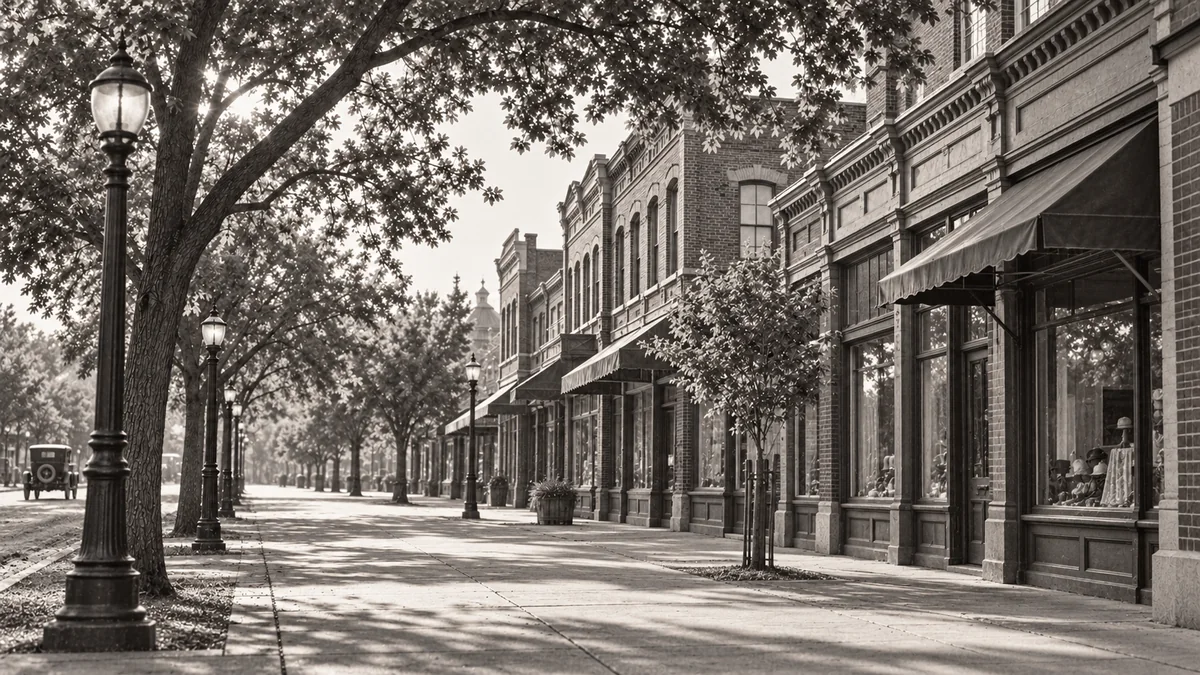
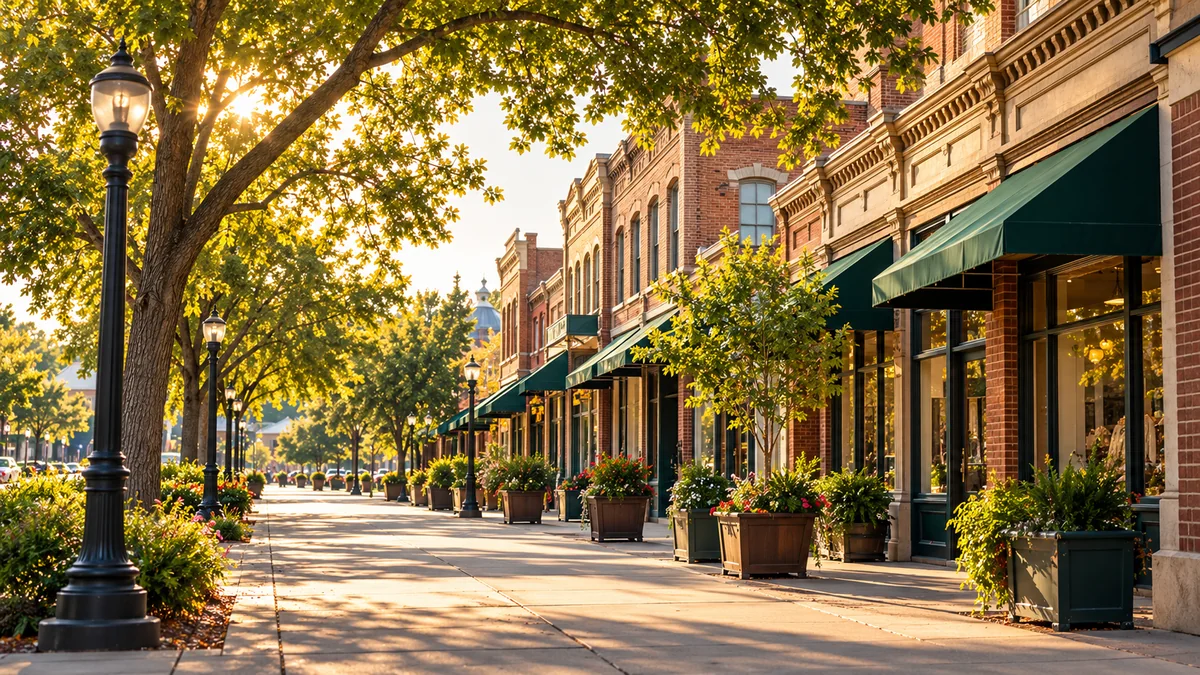
When comparing an old image with a present-day scene, identify fixed relationships first: a street intersection, the spacing between buildings, or a roofline beside a recognizable landmark. A different camera position can make the same street seem much wider or hide features that still survive.
Maps provide another way to test location. The Library of Congress guide to Sanborn map symbols explains why colors, abbreviations, and edition-specific keys matter. Where suitable coverage exists, a mapped building footprint can help test a photographic identification. Read the key rather than treating colors as decoration.
Compare one feature at a time. Has a doorway moved? Does the upper floor retain the same window spacing? Is a neighboring structure absent? Make a separate note for each observation so later evidence can confirm or revise it without unraveling the entire interpretation. For residential buildings, researching a Roseville home connects these visual clues with other property records.
Ask what the picture leaves outside the frame
A photograph records a selected view. A ceremonial gathering may show who attended that event without showing everyone who lived nearby. A quiet street scene cannot, by itself, establish that a neighborhood was always quiet. Consider who made the image, why it was made, and who its intended audience might have been. Our exploration of shops, schools, and everyday life suggests ordinary activities worth investigating beyond a picture’s main subject.
For local context, the City’s Roseville Local History Center holds documents, photographs, and information about the city’s past. Our research resources guide offers additional starting points for connecting a visual detail with a broader investigation.
Keep the image and its evidence together
When sharing a finding, identify the holding institution or owner, the item number where available, and the date or date range supported by the record. Explain any uncertainty. The National Archives’ publication guidance also emphasizes useful credit information and checking an image’s use restrictions. An online download is not, by itself, permission to republish.
The strongest caption tells readers what is known and gives them a way to follow the evidence. An old photograph then becomes more than an attractive illustration: it becomes a traceable starting point for understanding change. Place it alongside the Roseville timeline, keep unresolved questions visible, and let each discovery suggest the next record to examine.