
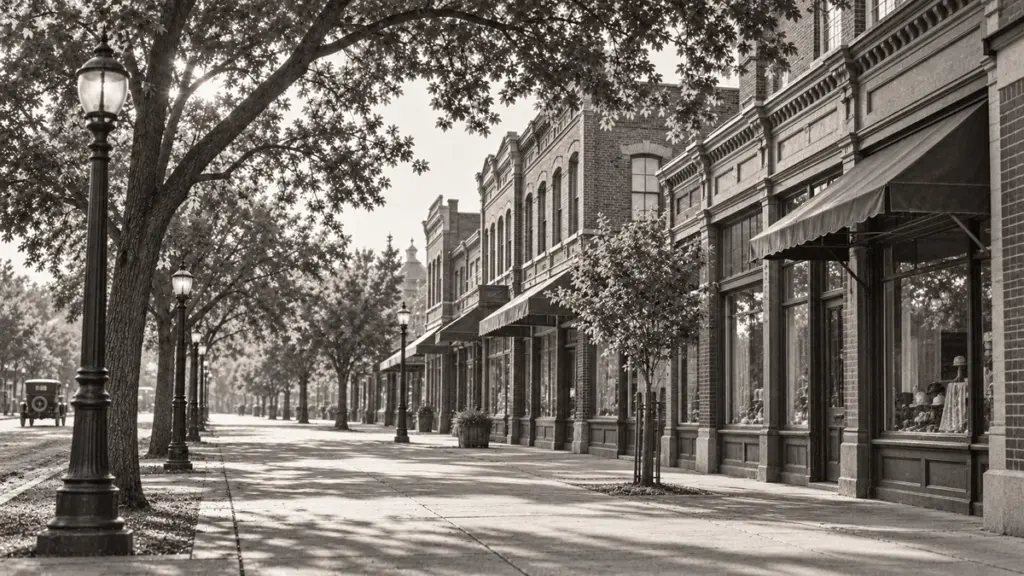
Old Town Roseville history is easiest to notice when you slow down. A row of upper-floor windows, an unusually deep storefront, or a building positioned close to the railway can suggest an earlier pattern of work and everyday life. The clues become more useful when they are compared with dated photographs and written records.
A then-and-now comparison asks two related questions: what has changed, and what has continued? Answering both avoids turning the district into a collection of charming facades. Old Town has been a place of commerce, gathering, rebuilding, and adaptation. Its history includes ordinary businesses and the people who used them.
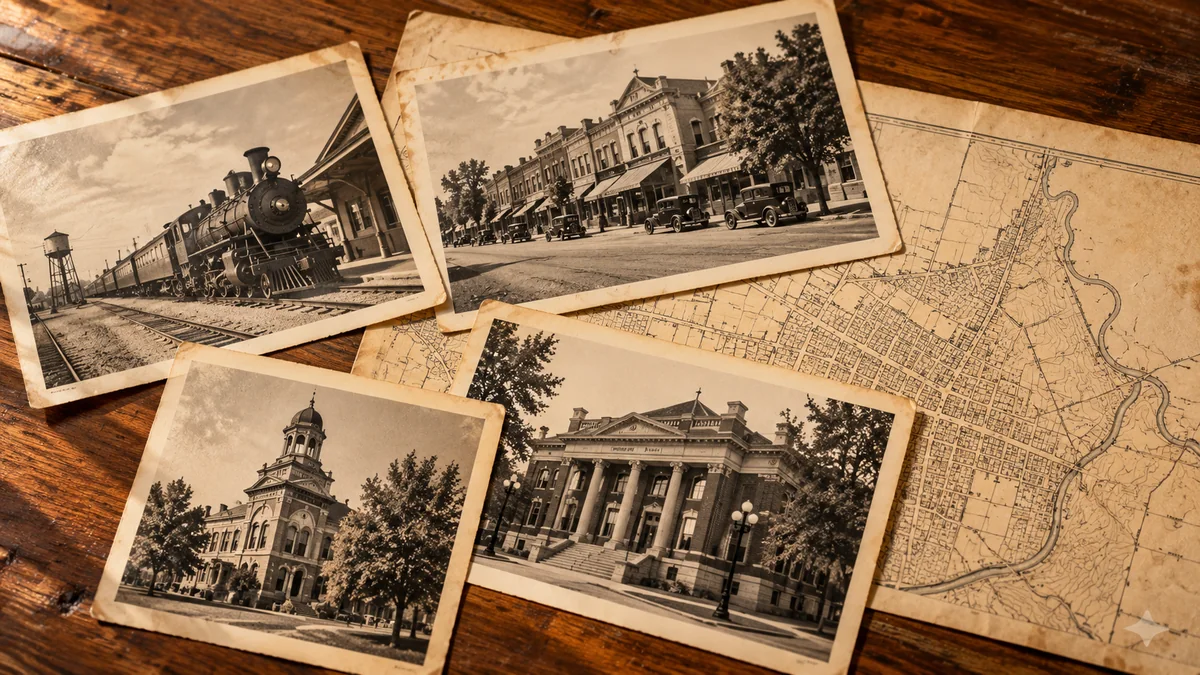
Begin by locating Old Town on the map
The City’s Downtown Specific Plan treats Historic Old Town, the Vernon Street district, and Royer and Saugstad Parks as connected parts of a larger planning area. Those names describe related places, but they should not be used interchangeably when identifying an old photograph.
Start with an intersection and a viewing direction. A caption that says only “downtown” leaves important questions unresolved. Street names, railway alignments, corners, and recognizable buildings can help establish where the photographer stood. Write down that location before comparing details with a modern image.
The railway provides a useful reference
Tracks and railway property are part of the area’s physical setting. They also help explain why a nearby commercial district would serve workers, travelers, and residents with different needs. Our article on how the railroad shaped Roseville provides the broader background for those connections.
For a close study, choose one block rather than the entire district. Record the addresses, building heights, entrances, and side streets visible today. A limited area makes it easier to distinguish an actual change from a mismatch between two photographs taken from different positions.
Fire and rebuilding changed the commercial landscape
The City’s historical overview describes the destructive Pacific Street fire of August 24, 1911, and the subsequent rise of Lincoln Street as a leading business location. This is one reason a familiar street can contain several different layers of building history.
An address can remain in use even when the structure changes. A replacement building may occupy an older business site, while a surviving building may receive a new storefront or internal layout. The date of a business, the date of a building, and the date of its current appearance therefore need separate entries in a research notebook.
The McRae Block shows how uses can overlap
The Roseville Historical Society’s building history collection dates the McRae Block at Lincoln and Main Streets to 1908. Its account describes an upstairs space used for activities including live theater, skating, and boxing, with businesses below. The same building could support several kinds of public life.
This provides a useful way to read a commercial facade. The street-level sign may identify only one occupant. An upper-floor hall, office, or residence might have a different history. A complete building profile should ask about both levels instead of allowing the most visible storefront to stand for everything that happened inside.
Compare photographs with a specific question
The Library of Congress’s primary-source analysis guides encourage close observation, reflection, and questions. Applied to Old Town, this means identifying what the image actually shows before deciding what the scene means.
Look for features that can be checked
- Rooflines and upper windows: These may help match buildings despite altered storefronts.
- Entrances and corners: Their position can clarify a viewing angle or a changed use.
- Street surfaces and curbs: Compare them with dated improvement records where available.
- Signs and neighboring businesses: Treat them as leads to directories and newspaper advertisements.
Interpret each photograph in context
An empty sidewalk does not establish that a street was usually quiet. A crowded scene could record a special event. Shadows, parked vehicles, seasonal conditions, and the photographer’s choices all affect the result. Preserve the original caption and date range, then state clearly which observations are certain and which need another source.
Our guide to what old photographs reveal explores this method in greater detail. For Old Town, the most helpful comparison is often a modest one: a doorway changed, a neighboring structure disappeared, or a business occupied the same corner under a different name.
Preservation includes the history of change
The National Park Service’s rehabilitation standards emphasize retaining a historic property’s important character while allowing a compatible use. They offer a useful framework for understanding why preservation involves more than making every building look as old as possible.
A later alteration may tell a meaningful part of a building’s story. A different entrance might reflect a changed occupant; an adapted room might have made a new community use possible. Determining what deserves retention requires knowledge of the particular property, its materials, and its history.
These principles do not establish that every building in Old Town has the same designation or legal requirements. They help readers ask better questions about the visible changes: what survives, what was altered, and what evidence supports the interpretation?
Follow one landmark into the wider neighborhood
The City’s library history identifies the Carnegie building at 557 Lincoln Street as the public library that opened in 1912 and later became a museum. Its continued presence offers a recognizable point from which to explore surrounding streets.
The Carnegie Library story also illustrates how one building can connect education, civic organization, architecture, and public memory. A neighborhood history becomes richer when these different subjects are considered together.
Another example appears in the historical society’s West House account. Built by F. B. Rossi for George West in 1907, it combined dining, a bar, and lodging. Its varied uses offer a reminder that everyday services belong in an Old Town history alongside libraries and public halls.
An Old Town comparison worth keeping
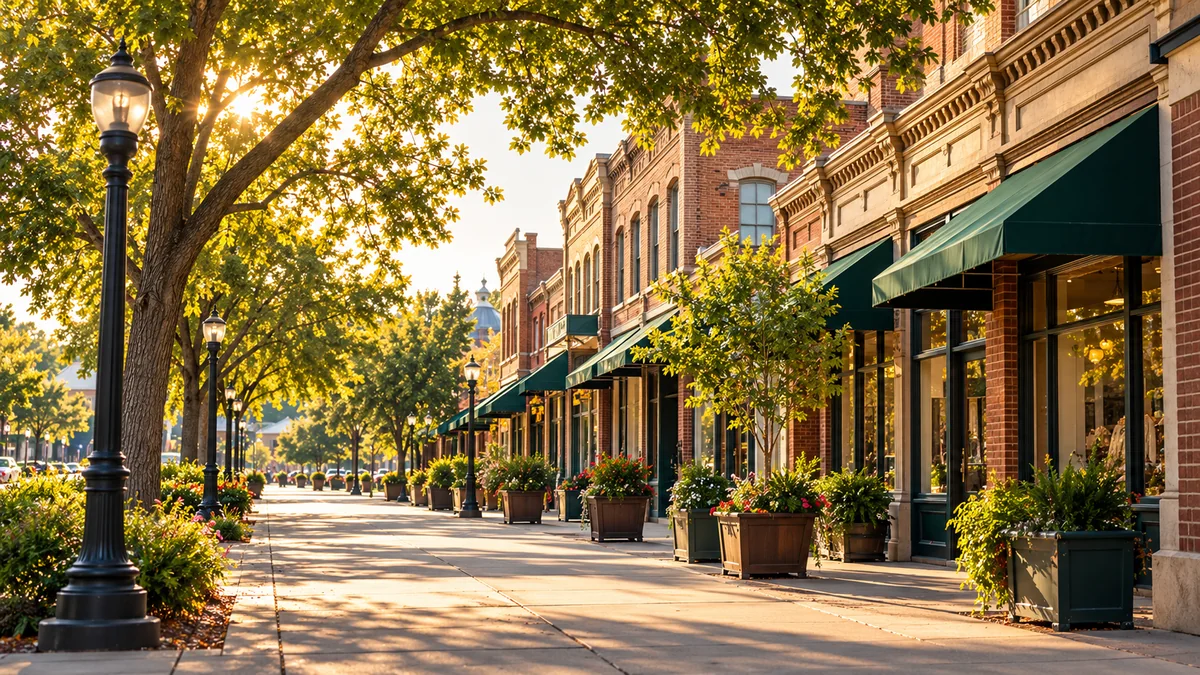
Build a simple record for each comparison: the address, the earlier image’s date and source, the current photograph’s date, and a short explanation of the changes you can verify. Keep uncertain identifications separate from established facts. Credit both images and check permission before publishing them.
Old Town’s value lies partly in this combination of continuity and change. Buildings carry traces of earlier activities while remaining part of a living city. Reading them carefully makes a familiar block more interesting and turns a walk through Roseville into a conversation with its documented past.