
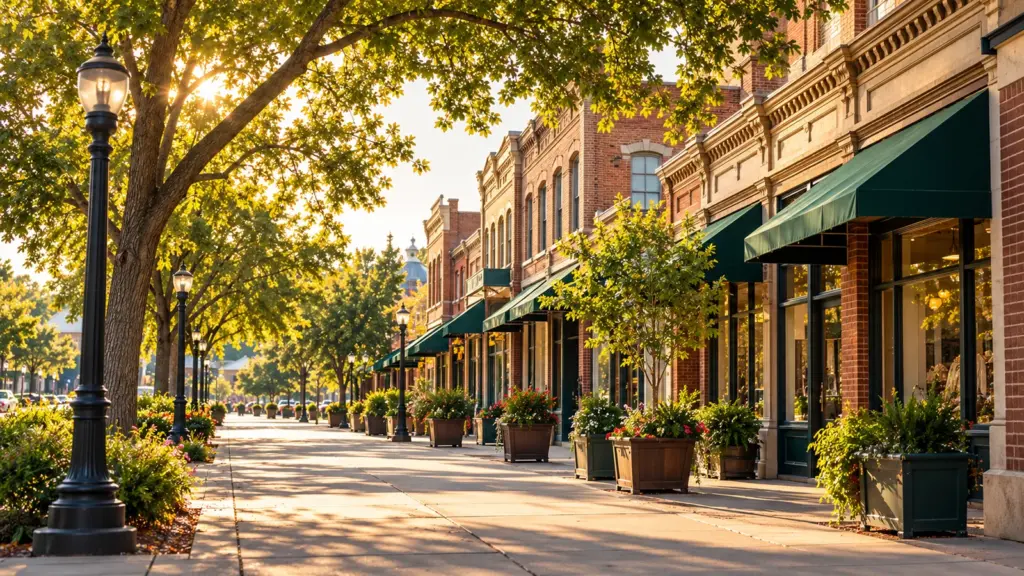
The history of everyday life in Roseville becomes easier to imagine when we look beyond major construction dates and famous names. A shopping trip, a classroom, a club meeting, or the route between home and work can reveal how a city functioned. These activities leave traces in advertisements, photographs, school records, and personal recollections. Read together, those traces help explain the relationships behind familiar streets.
The challenge is to recover those connections without inventing a comfortable version of the past. A remembered shop might have meant convenience to one household, employment to another, and an unaffordable expense to a third. Everyday history becomes more interesting when it allows those differences to remain visible.
A storefront is more than a business name
A shop’s location can connect commercial history with the changing layout of a town. The City of Roseville’s historical account records that Lohse & Fiddyment erected a store building at Vernon and Lincoln streets in 1910. The location offers a concrete starting point for asking how a corner changed, which businesses occupied it, and what later developments replaced.
Do not assume that a surviving name identifies one unchanged building. A business can move, expand, change ownership, or outlive its original premises. Likewise, a building may accommodate several unrelated businesses over time. Establish the address and date before joining two photographs or advertisements into one story.
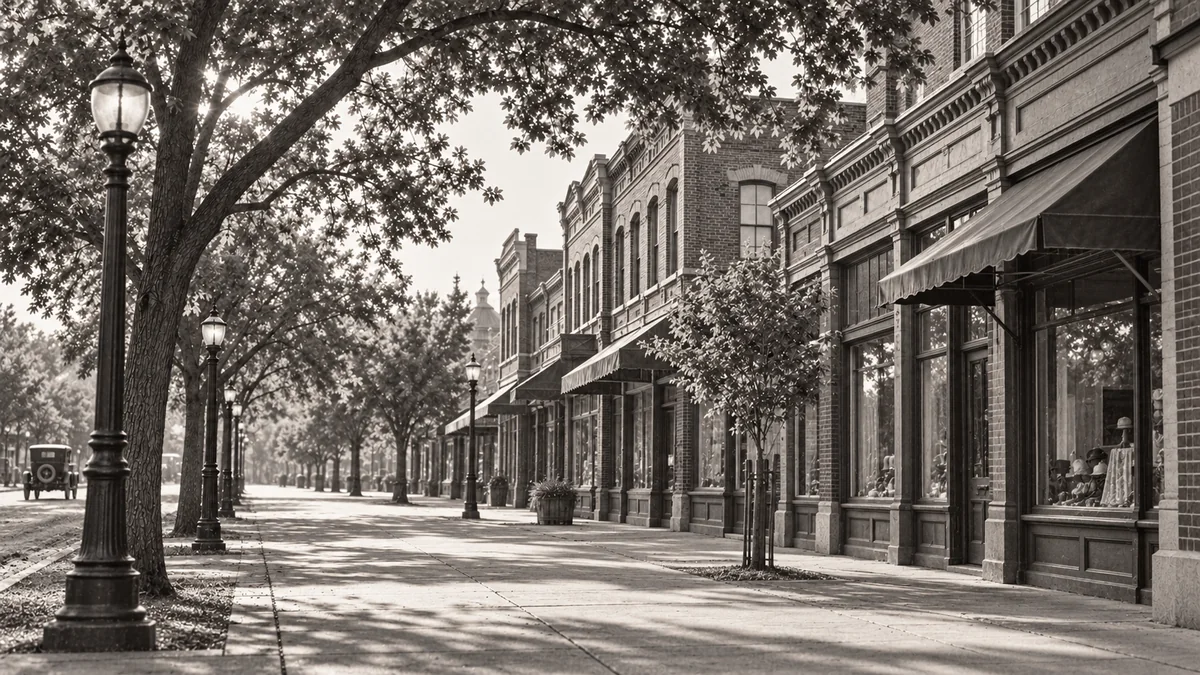
The same approach helps when reading Old Town, then and now. Compare the doors, upper windows, street alignment, and neighboring buildings. A familiar sign is useful evidence, but the surrounding details often help establish where and when it belonged.
Read advertisements as evidence of choices
The California Digital Newspaper Collection’s Roseville Press-Tribune archive provides access to dated newspaper records. An advertisement can establish what a seller offered or wanted readers to believe. It cannot, by itself, prove what every household bought. Record the newspaper title, issue date, and page so another reader can inspect the same evidence.
Schools reveal a community making room for children
School history can connect buildings with decisions about a community’s future. The separate Roseville Historical Society’s account of Roseville Union High School places the first classes in 1912 at the Golden Eagle Saloon and Lodging House on Vernon Street. It records the dedication of a high school building in 1916. These details show why a school’s founding date and the date of a particular campus building should be distinguished.
Think about what else needs to be established. How did students travel? Which subjects were offered? What did enrollment records include, and whom did they leave out? A building photograph answers only a small part of those questions. Class lists, school publications, board records, and contemporary reports can each add a different perspective.
A campus also contains layers of memory
Roseville High School’s centennial tour brings together videos about campus spaces for its 100th anniversary in 2012. Such a collection is valuable because places acquire meanings through repeated use. A field, gathering area, or classroom may remain important in alumni memories even after the surrounding campus changes.
Memory and documentation do different jobs. A former student’s recollection can explain why a location mattered personally. A dated plan or photograph can help determine what stood there at a particular time. Keeping both kinds of evidence makes a school history more informative than either a list of construction projects or a collection of nostalgic anecdotes alone.
Later schools open another window on growth
Roseville’s school story extends beyond its earliest institutions. Oakmont High School’s own history identifies 1966 as its opening year. Comparing school histories from different periods can create a useful framework for investigating the city’s changing geography.
An opening date is the beginning of a question, not a complete explanation. Compare it with neighborhood maps, transportation information, and records of nearby housing. Avoid assuming that every later development was caused by a school, or that a school served exactly the same area throughout its existence. Attendance boundaries and buildings need to be checked for the period being discussed.
Our article From farms to neighborhoods provides a broader way to think about those land-use changes. The everyday perspective adds another scale: how a changing street network might affect the route between a home, a school, and the places a family regularly visited.
Follow the work behind community life
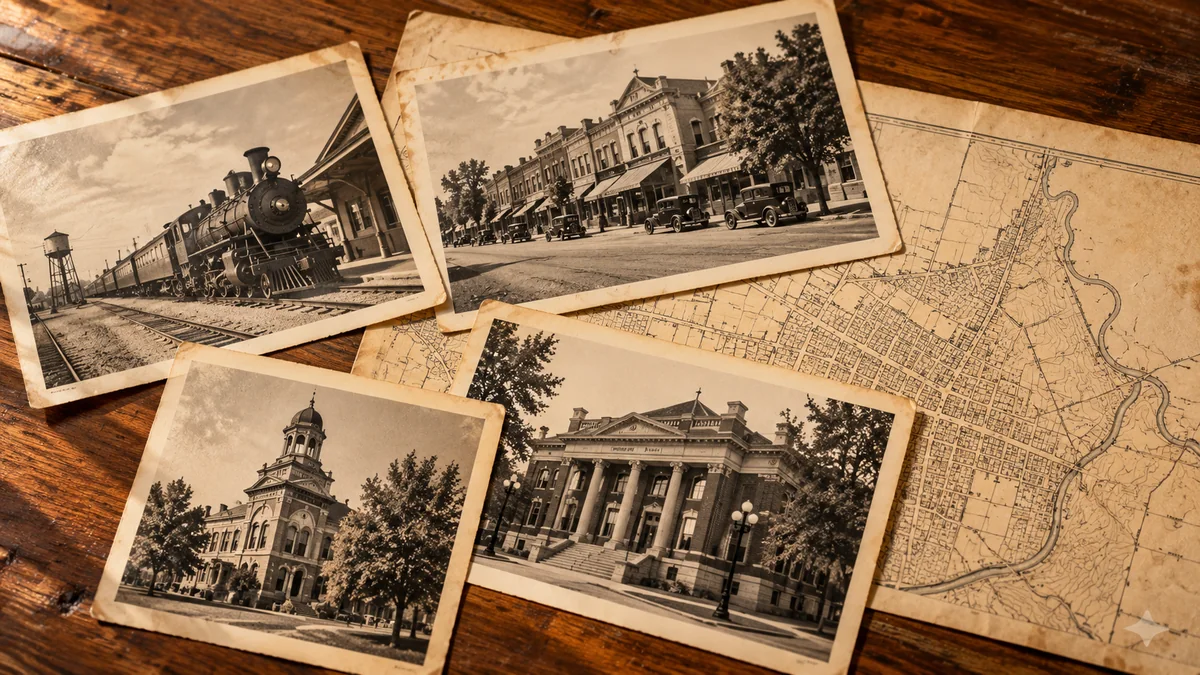
Everyday history should include the people whose work is less visible in a formal portrait or dedication ceremony. A shop photograph may identify the proprietor while leaving employees unnamed. A school publication might highlight an athletic team but say little about maintenance staff. A family account can overlook the cooking, cleaning, and caregiving that made other activities possible.
These are questions to investigate, not gaps to fill with assumptions. Look for names across different records, and distinguish a documented job from a role inferred from a photograph. If an identification remains uncertain, say so. There is value in showing exactly where the evidence stops.
Public gathering places offer another route into the subject. The Carnegie Library story considers one familiar civic building. Reading it alongside school and commercial histories can help frame a larger question: where could people find information, spend time, and take part in community life?
Use family recollections as starting points
An interview is strongest when the speaker can describe a specific experience. Ask about a place, a task, or a journey. Record when the conversation occurred and whether the person witnessed the event or heard about it from someone else. Preserve uncertainty instead of quietly turning an approximate memory into an exact date.
Begin with one ordinary question
“What was on the way to school?” can lead to a useful account of crossings, shops, meeting places, and distances. Follow up with a map or photograph from the relevant period. The question invites detail without telling the speaker what the answer ought to be.
Build a history that others can follow
Start with one address or institution and assemble a small, dated sequence of evidence. Note what each source establishes, where sources disagree, and which questions remain unanswered. Our guide to what old photographs reveal can help with the visual part of that work.
Shops and schools matter because they connect public history with repeated human activities. Their stories become richer when buildings, work, learning, and family memory are examined together. A carefully identified photograph or a well-documented recollection can restore an ordinary place to the city’s history without pretending that everyone experienced it in the same way.